
Insulated Glass Unit
How Insulated Glass Unit Work
VERSATILE USES
Insulated Glass Unit
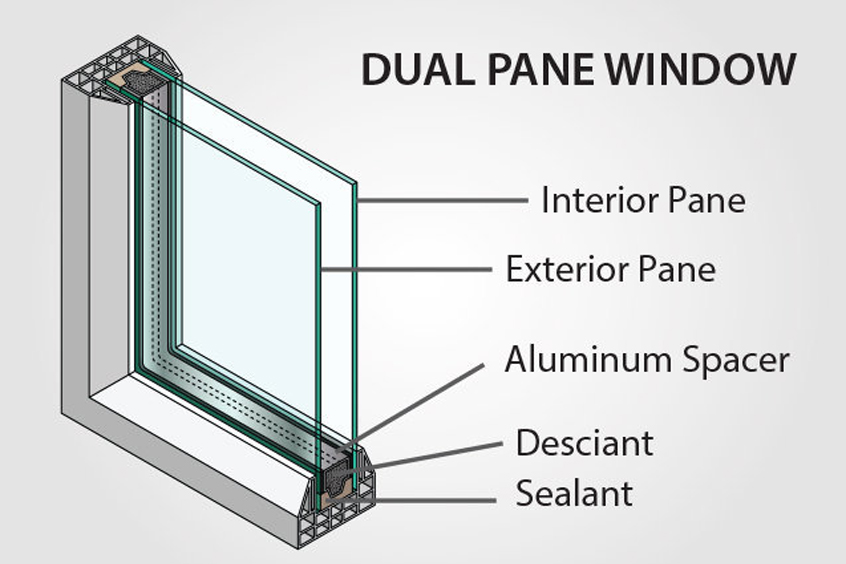
Insulated Glass Units (IGUs) work by combining multiple layers of glass with a sealed air or gas-filled space between them to improve thermal insulation, reduce noise, and enhance energy efficiency.
COMFORT
Energy Efficiency
The main function of an IGU is to reduce heat transfer between the interior and exterior environments. The multiple glass layers and the insulating gas between them reduce the flow of heat, which helps keep the indoor temperature consistent. This results in reduced energy consumption for heating and cooling.
- In winter, IGUs prevent heat from escaping from inside a building, keeping the interior warm.
In summer, they prevent external heat from entering the building, helping keep the interior cooler.

PEACEFUL
Noise Reduction
The layers of glass and the space between them also help to reduce sound transmission. The multiple layers and air/gas gaps dampen noise, making IGUs ideal for applications in noisy environments such as near highways, airports, or busy urban areas.

MOISTURE CONTROL
Condensation Prevention
The insulating properties of the gas between the glass panes help to maintain the temperature of the inner surface of the window closer to the room temperature. This reduces the likelihood of condensation forming on the window, which can cause moisture buildup, mold, or mildew.
FADING PREVENTION
UV Protection
IGUs that are designed with coatings or low-emissivity (Low-E) glass that reflects harmful UV rays. These coatings help to protect interiors from fading and minimize UV radiation exposure.
IGU Components
Glass Panes
IGUs typically consist of two or more glass panes. These panes form the basic structure of the unit and serve as the primary barrier against heat, sound, and UV rays. The glass panes are usually treated with coatings, such as Low-E or reflective coatings, to enhance performance. The glass panes provide physical protection, while also allowing light to pass through.
Spacer Bar
The spacer bar is located between the glass panes, creating a gap between them. The spacer bar ensures that the glass panes are held at a consistent distance apart, which is crucial for creating an insulating barrier. The spacer also helps maintain the structural integrity of the IGU by holding the panes securely. Additionally, the spacer contains desiccant material to absorb moisture from the air and prevent condensation inside the unit.
Sealant
The edges of the IGU are sealed to prevent air and moisture from entering the space between the glass panes. The sealant holds the entire unit together, ensuring that no moisture or contaminants can reach the insulating gas and that the IGU remains airtight. The sealant also helps in maintaining the overall structural stability of the IGU. The seals consists of primary butyl seal and secondary silicon seal, whch are designed to provide long-lasting durability.
Argon Gas
The space between the glass panes is filled with air or an insulating gas such as argon. These gases are denser than air and have lower thermal conductivity, which helps reduce heat transfer between the interior and exterior. The presence of these gases improves the thermal efficiency of the IGU, making it more energy-efficient than single-pane glass. The gas also helps with soundproofing by damping sound transmission.
Desiccant
Desiccant assures optimum moisture and chemical absorption and minimizes the effects of temperature-related pressure changes.
QUALITY STANDARDS & DISCLAIMERS
Our safety glass products are manufactured in accordance with the relevant Australian Standards. From a single panel to a complete building fit out, Watson Glass is there to help.